Self-Care for Busy Women: 12 Small Habits That Make a Real Difference
 Noah Orono
At-home beauty devices can help, but only a few are worth the money. LED light masks and home radiofrequency devices have the best evidence for modest improvements in fine lines and skin texture, microcurrent gives a short-lived lift, and gua sha or facial rollers mainly reduce puffiness for a few hours. None of them replaces daily sunscreen and a retinoid, and none will match an in-office treatment, so think of them as an optional extra once your basic routine is in place.
Key takeaways
- LED masks and home radiofrequency (RF) devices have the most research behind them, but the studies are small and often funded by manufacturers.
- Expect subtle results that take weeks of regular use and fade if you stop.
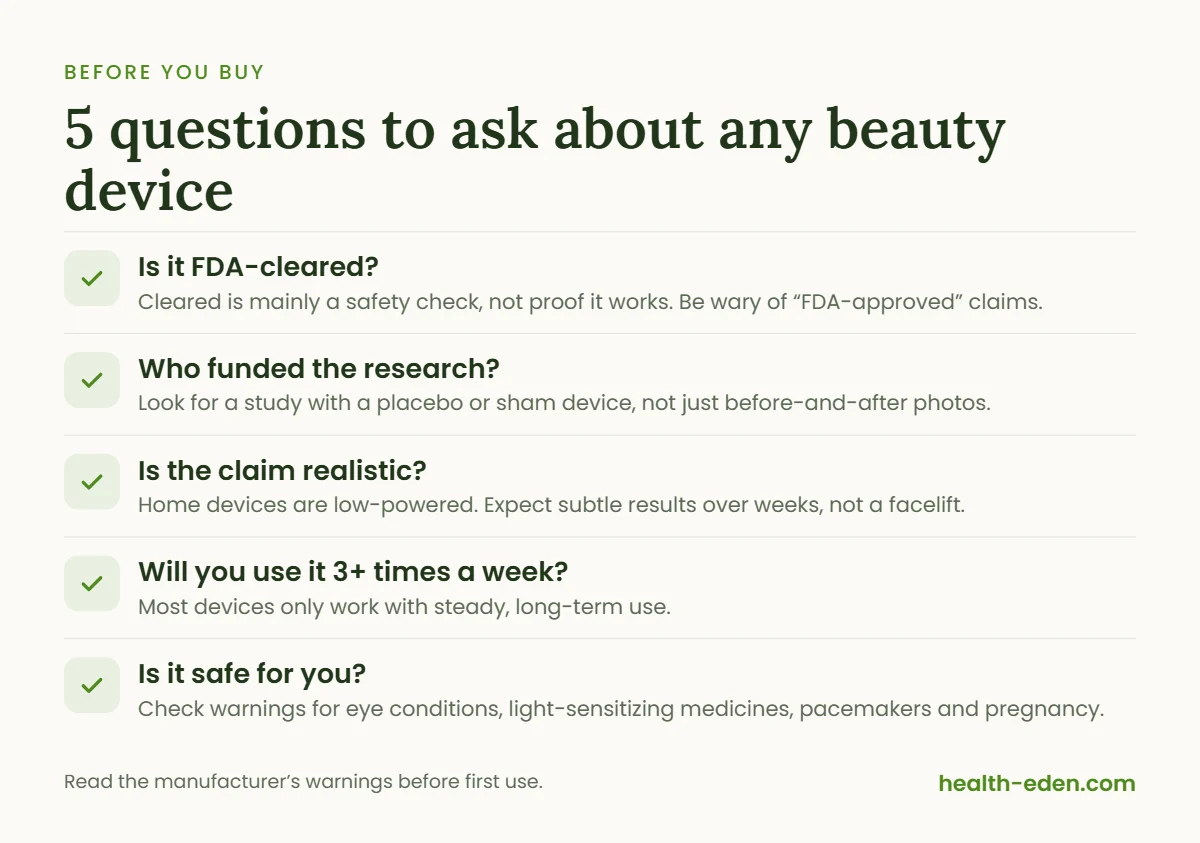
- “FDA-cleared” is mainly a safety check. It doesn’t prove a device works.
- Microcurrent, gua sha and rollers mostly give temporary effects, such as a short-lived lift or less morning puffiness.
- Skip at-home tools that puncture the skin. The AAD warns they can cause infection and scarring.
- Spend on sunscreen and a retinoid first. A device makes sense only once those are a habit.
How to judge any at-home beauty device
Beauty devices are marketed with bold claims and before-and-after photos. Three questions help you see past the hype.
1. Is it FDA-cleared, and do you know what that means? Many skin devices go through the FDA’s 510(k) process. “FDA-cleared” means the FDA found the device substantially equivalent to one already on the market, which is mainly a safety check. As a 2026 report from the Center for Science in the Public Interest (CSPI) puts it, clearance means the FDA thinks the device poses a low risk, “not that they necessarily work.” The American Academy of Dermatology (AAD) agrees that FDA clearance “doesn’t tell you anything about how effective the device is.” Be wary of “FDA-registered”, which says nothing about safety, and of devices advertised as “FDA-approved” or “FDA-certified”. The FDA clears these devices rather than approving them, so that wording is a red flag.
2. Who did the research? Most studies on home devices are small, short and paid for by the company that makes the device. That doesn’t make them worthless, but it does mean results should be read with some caution. A study with a placebo or “sham” device is much stronger than one with no comparison group at all.
3. Is the claim realistic? Home devices are generally lower-powered than professional ones. The AAD notes that the red light dermatologists use is more powerful than the light in home devices. Claims like “a facelift without surgery” or “results in one use” don’t match what the research shows.
The 6 most popular at-home beauty devices, rated
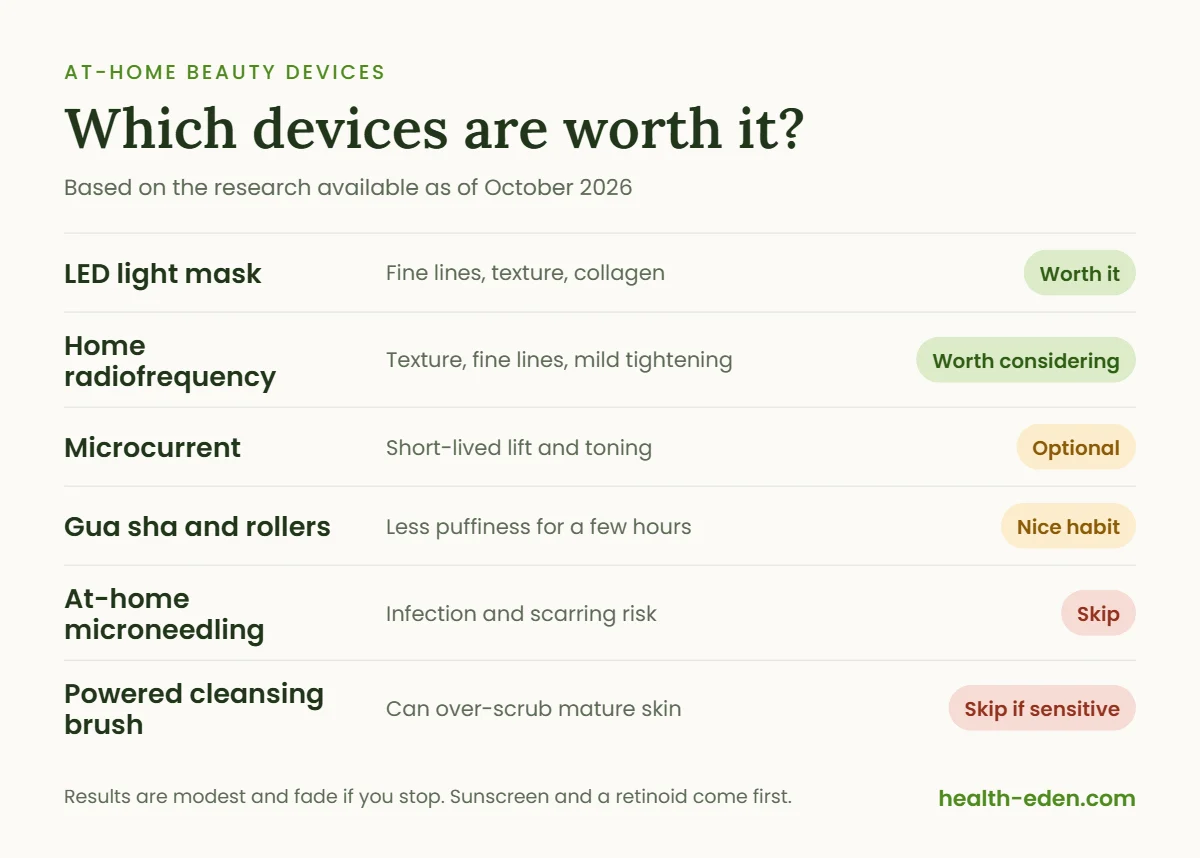
Here is how the main types of device compare, based on the research available as of October 2026.
| Device | What it may do | Strength of evidence | Our verdict |
|---|---|---|---|
| LED light mask (red and near-infrared) | Modest improvement in fine lines, texture and collagen | Some: a few small trials, often industry-funded | Worth it if you’ll use it consistently |
| Home radiofrequency (RF) | Smoother texture, fewer fine lines, slight tightening | Limited but promising | Worth considering |
| Microcurrent | Short-term lift and toning | Limited | Optional; results are temporary |
| Gua sha and facial rollers | Less puffiness, relaxation | Limited; effects last hours | Fine as a pleasant habit |
| At-home microneedling (dermarollers, needle pens) | Little at home; risks if it breaks the skin | Weak at home | Skip; see a dermatologist instead |
| Powered cleansing brushes | Cleaner skin, but can over-scrub | Little anti-aging evidence | Skip if your skin is dry or sensitive |
1. LED light masks: worth it if you’ll stick with it
LED masks shine red and often near-infrared light onto the skin. The idea is that these wavelengths prompt skin cells to make more collagen. This process is called photobiomodulation.
What the research says: The best-known controlled trial, published in Photomedicine and Laser Surgery in 2014, treated 113 volunteers with red or broader-spectrum light twice a week for 30 sessions and compared them with 23 untreated controls. The treated groups had smoother skin, better complexion and higher collagen density on ultrasound scans, and blinded reviewers of their photos agreed they looked better. That study used large light panels, not face masks. For masks themselves, CSPI’s review describes the evidence as “not great”: one manufacturer-funded trial in 59 middle-aged adults found a slight reduction in crow’s feet after 12 weeks.
The honest summary: the AAD says red-light LED devices “can produce subtle to noticeable results on the face,” short-term use appears safe, and results build slowly over months of regular use. Long-term effects are still unknown.
Watch out for: your eyes. If the instructions call for eye protection, the AAD says to wear it every time, and not to substitute sunglasses for proper goggles. In 2019, Neutrogena recalled its Light Therapy Acne Mask in the US, Canada, the UK and Ireland over a theoretical risk of eye injury for people with certain eye conditions or taking medicines that make their eyes more sensitive to light. If you take any medicine that causes light sensitivity, ask your doctor or pharmacist before using an LED device.
2. Home radiofrequency (RF): worth considering
RF devices gently heat the deeper layers of the skin, which is thought to tighten existing collagen and encourage new collagen to form.
What the research says: In a 2022 randomized split-face trial published in Dermatology and Therapy, 32 women used a home RF device with red light on one side of the face and a commercial anti-aging cream on the other for 12 weeks. The device side showed greater improvement in wrinkles and skin thickness, with an early boost in radiance, and no side effects were reported. However, the trial was small, the women knew which side was which, and the device was supplied by its manufacturer.
Watch out for: burns. Choose a device with built-in temperature sensors and keep it moving, exactly as the instructions say.
3. Microcurrent: optional, and temporary
Microcurrent devices send a very low electrical current through the skin, with the aim of stimulating the facial muscles to look more lifted and toned.
What the research says: Independent research on at-home microcurrent is very limited. Most of what exists is small and funded by manufacturers. Many people like the slightly lifted look right after a session, but any effect fades within a day or so, which is why these devices are designed for frequent, ongoing use.
Watch out for: microcurrent and RF devices are generally labeled as unsuitable for people with a pacemaker or other implanted electronic device, during pregnancy, and over broken or irritated skin. Always read the manufacturer’s list of warnings before you buy.
4. Gua sha and facial rollers: fine as a pleasant habit
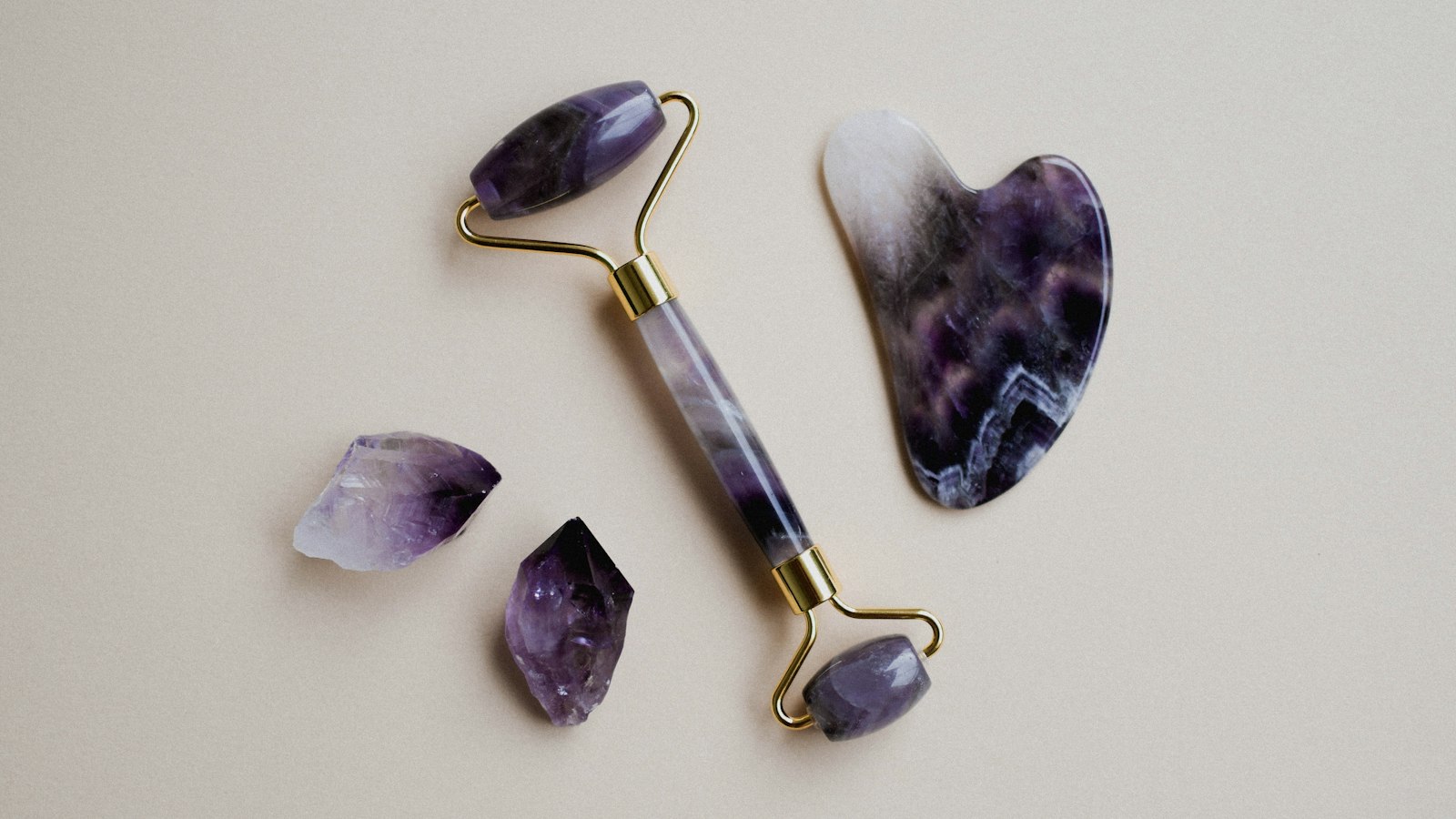
Gua sha (a flat, smooth stone scraped gently over the skin) and jade or quartz rollers are simple massage tools.
What the research says: A 2023 review in the Journal of Cosmetic Dermatology found some plausible benefits for blood flow and lymphatic drainage, but not enough evidence to support anti-aging claims. As Dermatology Times summarizes, the main effect is a short-term reduction in facial puffiness, and permanent changes to wrinkles or your jawline aren’t realistic.
Watch out for: pressing too hard. Firm pressure can bruise facial skin, and gua sha is best avoided if you have rosacea or broken capillaries. Avoid areas where you’ve had filler or wrinkle-relaxing injections until your injector says it’s safe.
5. At-home microneedling: skip it
Microneedling creates tiny wounds in the skin to trigger repair. It has good evidence as an in-office treatment for acne scars and texture, but the at-home versions are a different story.
What the AAD says: At-home products “aren’t meant to puncture the skin,” and gentler tools give less noticeable results than treatment from a dermatologist. If a home device does pierce the skin, the AAD warns that it “could lead to an infection or scarring,” and that at-home microneedling can spread warts, cold sores (herpes) and other viruses across the skin.
Better option: if acne scars or texture bother you, ask a board-certified dermatologist about professional microneedling.
6. Powered cleansing brushes: skip them if your skin is dry or sensitive
Spinning or vibrating brushes promise deeper cleansing, but they have little anti-aging evidence. The AAD advises cleansing with your fingertips, noting that “using a washcloth, mesh sponge, or anything other than your fingertips can irritate your skin.” Mature skin is usually drier and more delicate, so over-scrubbing is a bigger risk than under-cleansing. If you love your brush, use it gently and not every day.
Worked example: is an LED mask cheaper than in-office treatment?
Prices vary a lot, but CSPI’s 2026 report gives typical figures you can use for a quick comparison:
- At-home LED mask: about $400 or more (one-time cost).
- In-office LED session with a dermatologist: more than $100 per session.
- Break-even point: $400 ÷ $100 = 4 sessions or fewer. After four professional sessions at most, the mask has paid for itself.
Time is the hidden cost. In the main mask trial CSPI describes, people used the mask for 9 minutes a day, 5 days a week. Over 12 weeks that’s:
- 5 sessions × 12 weeks = 60 sessions
- 60 × 9 minutes = 540 minutes, or 9 hours
So the mask is cheaper in the long run, but only if you’ll actually use it several times a week for months. In-office devices are more powerful, so they may work faster. Check your own device’s instructions for the recommended time and frequency, and don’t exceed them.
Devices vs skincare: where to spend first
If your budget is limited, devices should come after the basics. Daily broad-spectrum sunscreen and a nightly retinoid have far stronger evidence than any home device, and they cost much less. Our anti-aging skincare routine for women over 40 explains how to build that foundation step by step.
Once your routine is a habit, a device can be a nice addition, especially if you enjoy the ritual. A few quiet minutes with a mask can double as a moment of rest, which ties in with our small self-care habits for busy women. If your evenings are restless, our guide to mindfulness for better sleep pairs well with a calm wind-down routine. For the bigger picture of what keeps you looking and feeling well with age, see our guide on how to age well.
Honest pros and cons of at-home beauty devices
Pros
- Convenient and private: no appointments or travel.
- Cheaper than repeated in-office treatments over time.
- LED and RF devices have reasonable short-term safety records when used as directed.
- The routine itself can be relaxing.
Cons
- Results are subtle, slow and fade if you stop.
- Most studies are small, short and funded by manufacturers.
- Upfront cost is high, and cheap copies may not deliver the right light or energy levels.
- Easy to misuse: too long, too often, or on irritated skin.
- None of them replaces sunscreen, a retinoid or professional treatment for deeper wrinkles and sagging.
Who should be careful
- If you take medicines that make you sensitive to light (some antibiotics, acne and psoriasis treatments, and others), or have a light-sensitive condition such as lupus, check with your doctor or a dermatologist before using LED devices.
- If you have a darker skin tone, the AAD notes you may be more sensitive to visible light and at higher risk of lasting dark spots, so talk to a dermatologist before starting red light therapy.
- If you have an eye condition, use eye protection with any light device and ask your eye doctor first.
- If you have a pacemaker or other implanted electronic device, don’t use microcurrent or RF devices unless your doctor says it’s safe.
- If you have epilepsy, a history of seizures or active cancer, don’t use microcurrent devices unless your doctor says it’s safe.
- If you’re pregnant or breastfeeding, most home devices haven’t been tested in pregnancy, so it’s best to wait or ask your doctor.
- If you have rosacea, broken capillaries or very sensitive skin, avoid firm gua sha and powered brushes, and introduce any device slowly.
- If you’ve recently taken isotretinoin, have active acne, a skin infection or a cold sore, don’t microneedle. The AAD advises waiting at least a month after your last isotretinoin pill before microneedling.
- If you’ve had fillers or injections, ask your injector before using RF, microcurrent or gua sha on treated areas.
When to see a dermatologist
Stop using the device and see a dermatologist or doctor if you notice:
- Burning, blistering, a rash or swelling that doesn’t settle within a day or two.
- Dark patches or uneven color appearing after using a device.
- Eye pain, discomfort or changes in your vision after using a light device. Stop and see a doctor.
- A mole or spot that’s new or changing. Don’t treat it with a device; get it checked.
A dermatologist is also the right person to see if you want stronger results for deeper wrinkles, sagging or scarring, since in-office lasers, RF and microneedling are far more powerful than home versions.
Frequently asked questions
Do at-home beauty devices actually work?
Some do, modestly. LED masks and home radiofrequency devices have the best evidence for small improvements in fine lines and texture after weeks of regular use. Microcurrent, gua sha and rollers mostly have temporary effects. None replaces sunscreen and a retinoid.
What does “FDA-cleared” mean for a beauty device?
It means the FDA found the device substantially equivalent to one already on the market, which is mainly a safety check. It doesn’t prove the device works. Be cautious of devices advertised as “FDA-approved” or “FDA-certified”, because the FDA clears these devices rather than approving them.
Is at-home microneedling safe?
The AAD advises against home tools that puncture the skin, because they can cause infection, scarring and spread viruses like cold sores. Gentler home tools give much less noticeable results than treatment from a dermatologist.
Which beauty device is best for women over 50?
If you want one device, an LED mask has the most research and a good safety record, and a home RF device is a reasonable alternative for texture and mild laxity. Choose an FDA-cleared device, use it consistently, and keep wearing daily sunscreen.
The bottom line
At-home beauty devices that are worth it are the ones with research behind them and that you’ll actually use: an LED mask or a home radiofrequency device, used consistently for months, can give modest improvements in fine lines and texture. Microcurrent and gua sha are pleasant extras with short-lived effects, and at-home microneedling is best left to a dermatologist. Whatever you choose, put your money into daily sunscreen and a retinoid first.
Sources
- Wunsch A, Matuschka K. A controlled trial to determine the efficacy of red and near-infrared light treatment in patient satisfaction, reduction of fine lines, wrinkles, skin roughness, and intradermal collagen density increase. Photomedicine and Laser Surgery, 2014;32(2):93-100. PubMed.
- Shu X, et al. Effectiveness of a radiofrequency device for rejuvenation of aged skin at home: a randomized split-face clinical trial. Dermatology and Therapy, 2022;12:871-883. Read the study.
- Center for Science in the Public Interest. Can red-light therapy reverse skin aging? September 2026.
- American Academy of Dermatology. Is red light therapy right for your skin?
- American Academy of Dermatology. Microneedling can fade scars, uneven skin tone, and more.
- American Academy of Dermatology. Face washing 101.
- Hamp A, et al. Gua sha and facial massage tools: a review. Journal of Cosmetic Dermatology, 2023;22(2):700-703.
- Dermatology Times. Social media mythbusters: at-home facial gua sha.
- Cosmetics Business. Neutrogena recalls Light Therapy Acne Mask in the US. July 2019.
- Association of Optometrists. Eye injury risk prompts recall of Neutrogena light therapy acne mask. July 2019.
Information checked as of October 2026. Read how we research and update articles in our editorial policy.
This article is for general information and isn’t a substitute for personal medical advice. Talk to your doctor or dermatologist before using a new device, especially if you have a medical condition or take regular medicines. See our full medical disclaimer.

I'm Noah Orono, founder and editor of Health Eden. I write about skincare and healthy aging, strength and weight management, and women's health from your 30s into midlife and beyond. Every guide starts with published research and guidance from dermatologists, doctors and certified trainers, then turns it into clear, practical steps. I'm not a medical professional, so I'll always tell you when something is worth raising with your doctor.
More about Health Eden →