Self-Care for Busy Women: 12 Small Habits That Make a Real Difference
 admin
When it comes to cardio workouts, two popular machines often come to mind: treadmills and ellipticals. Both machines provide effective cardiovascular exercise, but they differ in terms of features, benefits, and workout experiences. In this article, we’ll compare and review treadmills and ellipticals to help you determine which machine suits your fitness goals and lifestyle.
Treadmills are well-known for their versatility and ability to simulate outdoor running or walking. With adjustable speed 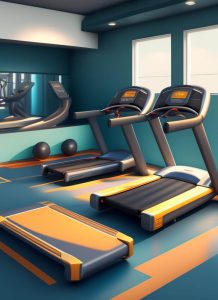 and incline options, treadmills offer a wide range of workout intensities and variations. They engage the muscles in your lower body, particularly the quadriceps, hamstrings, and calves. Treadmills also offer the advantage of weight-bearing exercise, which can help improve bone density. However, the impact on joints can be higher compared to ellipticals, making them less suitable for individuals with joint issues or injuries.
On the other hand, ellipticals provide a low-impact workout that is gentle on the joints. These machines mimic the natural motion of walking or running, but with the feet always in contact with the pedals. This reduces the risk of joint strain or impact-related injuries. Ellipticals engage both the upper and lower body muscles, including the quadriceps, hamstrings, glutes, biceps, triceps, and chest muscles. They also offer the advantage of reverse motion, targeting different muscle groups and adding variety to workouts.

In terms of calorie burn, both machines can be effective for weight loss and cardiovascular fitness. The number of calories burned depends on factors such as intensity, duration, and individual body composition. Generally, ellipticals provide a lower perceived exertion compared to treadmills, which can result in longer, more sustained workouts.

Considerations for choosing between treadmills and ellipticals include space requirements, budget, and personal preferences. Treadmills typically take up more space and require a larger budget compared to ellipticals. If you have limited space, an elliptical may be a more practical option. Additionally, some individuals may prefer the natural, weight-bearing motion of running or walking on a treadmill, while others may prefer the smooth, low-impact motion of an elliptical.
In conclusion, both treadmills and ellipticals offer powerful cardio workouts with their unique features and benefits. Treadmills provide versatility, simulated outdoor running or walking experiences, and weight-bearing exercise, while ellipticals offer low-impact workouts that engage the entire body. Ultimately, the choice between the two machines depends on individual needs, goals, and preferences. By considering factors such as workout intensity, impact on joints, calorie burn, space requirements, and budget, you can select the cardio machine that best aligns with your fitness journey.