Self-Care for Busy Women: 12 Small Habits That Make a Real Difference
 Noah Orono
Menopause changes your skin mainly because estrogen falls, and estrogen helps your skin make collagen, hold on to water and repair itself. The most common changes are dryness, itching, thinner and less firm skin, more noticeable wrinkles, slower healing, and for some women adult acne, dark spots or new facial hair. A gentle, fragrance-free routine with a good moisturizer, daily broad-spectrum SPF 30 or higher and a nighttime retinoid helps most women, and a dermatologist can help with anything that doesn’t improve.
Key takeaways
- Skin collagen falls by about 2% a year after menopause, with around 30% lost in the first 5 years.
- Dryness and itching are the most common changes, because skin makes less oil and holds less water.
- Some women get acne for the first time in their 40s or 50s, while others notice dark spots, redness or chin hairs.
- Switch to a gentle cleanser, a richer moisturizer, daily SPF 30 or higher and a nighttime retinoid.
- Collagen supplements and “menopause” skincare lines have limited evidence. Ingredients matter more than labels.
- See a doctor or dermatologist for a rash that won’t settle, sores that don’t heal, or a mole that changes.
Why menopause changes your skin
Estrogen does a lot of quiet work in your skin. It helps your skin make collagen (the protein that keeps it firm), supports hyaluronic acid and other moisture-holding molecules, keeps the skin barrier strong and helps wounds heal. As estrogen levels swing during perimenopause and then fall after your last period, all of those jobs slow down.
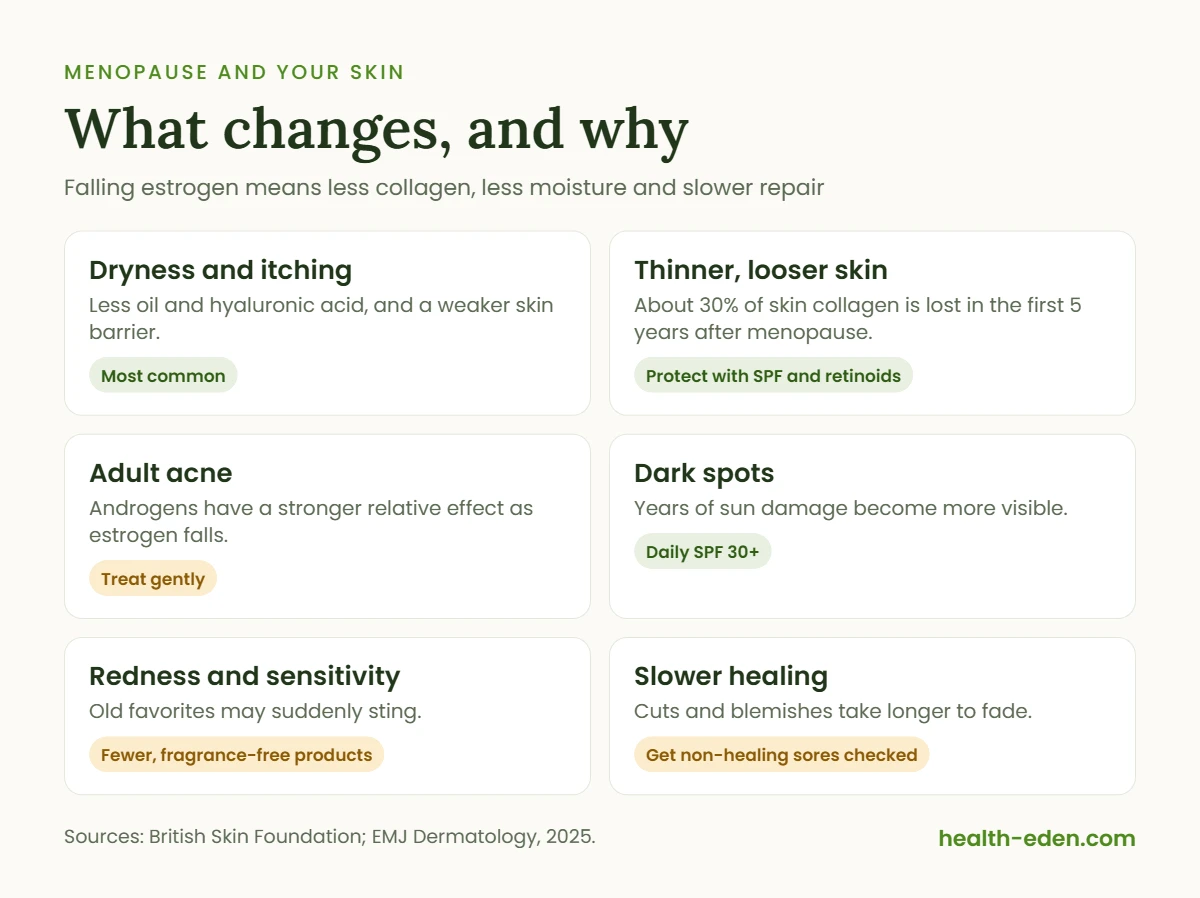
The change can be surprisingly fast. According to consultant dermatologist Dr. Anjali Mahto, writing for the British Skin Foundation, collagen falls by about 2.1% a year after menopause, and about 30% is lost in the first 5 years. A 2025 clinical review in EMJ Dermatology notes that this loss is linked more closely to the number of years without estrogen than to age itself.
That’s why many women say their skin changed almost overnight in their late 40s or early 50s, after years of behaving the same way.
The most common menopause skin changes
Not everyone gets all of these, and how much you notice depends on your genes, sun exposure, smoking history and skin type.
Dry, rough or flaky skin
This is the change most women notice first. After menopause your skin makes less oil (sebum), contains less hyaluronic acid and holds water less well. The British Skin Foundation notes that dryness is common on the face, genital area and lower legs, where skin is most sensitive to estrogen. Skin that used to be combination or oily can start to feel tight after cleansing.
Itching
Dry skin often itches, especially on the legs, back and arms, and especially in winter or after hot showers. The EMJ Dermatology review describes itching as common in postmenopausal women who aren’t taking hormone therapy. If itching is severe, comes with a rash, or keeps you awake, it’s worth seeing a doctor, because it can also have other causes.
Thinner, less firm skin and deeper wrinkles
With less collagen, skin becomes thinner and less elastic. You may notice:
- fine lines turning into deeper wrinkles
- sagging along the jawline and cheeks
- crepey skin on the neck, chest and arms
- skin that bruises or tears more easily
Slower healing
Cuts, scrapes and blemishes can take longer to heal, because estrogen supports the skin’s repair process. Thinner skin is also more easily damaged.
Adult acne
It surprises many women, but breakouts can appear in your 40s and 50s, sometimes for the first time. As estrogen falls, the relative effect of androgens (hormones such as testosterone) increases. The EMJ Dermatology review estimates that acne affects about 25% of women in perimenopause. The good news is that a 2025 review of 33 studies, presented at the American Academy of Dermatology meeting, found acne generally improves after menopause.
Acne at this age is tricky because many acne products dry the skin out, and menopausal skin is already dry. Gentle treatment is the key (see below).
Dark spots and uneven tone
Age spots and patches of uneven color often become more noticeable after menopause. They’re mostly the result of years of sun exposure, and they’re hard to fade at home without the right ingredients. Daily sunscreen helps stop them getting darker.
Redness and sensitivity
A weaker skin barrier means products you’ve used for years can suddenly sting or cause redness.
Facial hair
The same hormone shift that can cause acne can also cause coarse hairs on the chin and upper lip. The EMJ Dermatology review says this can affect up to half of postmenopausal women.
A skincare routine for menopausal skin
You don’t need an expensive “menopause” range. What helps most is a simple routine built around the right ingredients. If you’re starting from scratch, our anti-aging skincare routine for women over 40 walks through each step in more detail.
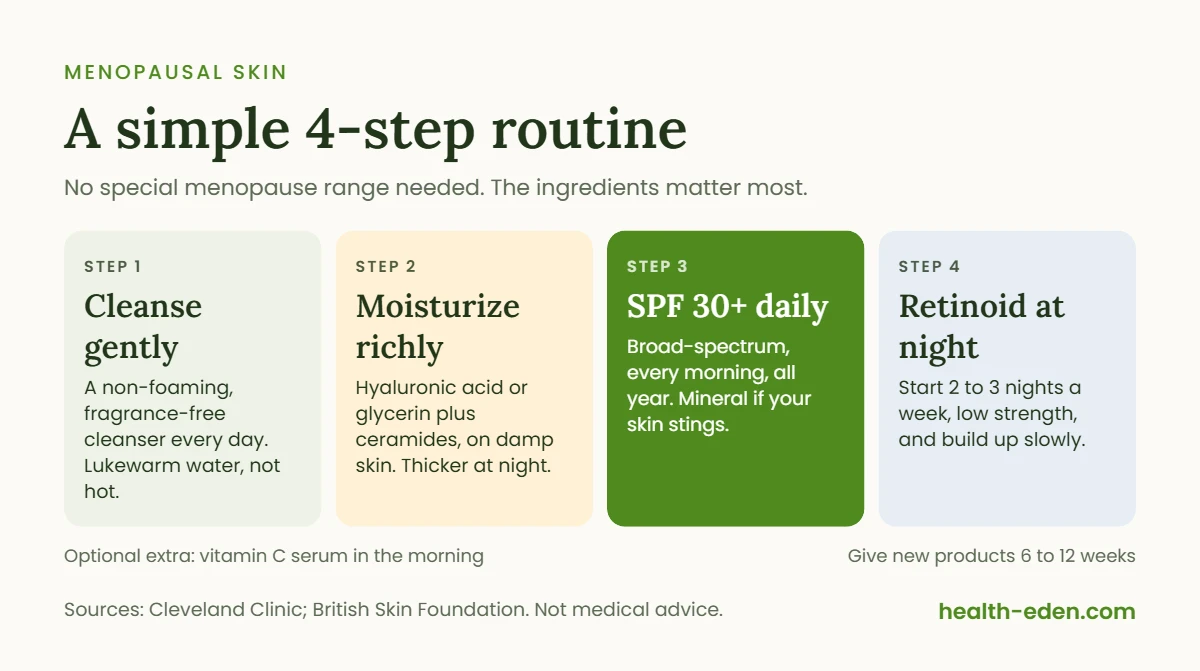
1. Cleanse gently, and less
Cleveland Clinic dermatologist Dr. Kiyanna Williams recommends cleansing every day, even if your skin is dry, using a gentle, non-foaming cleanser designed for sensitive skin. Save foaming cleansers for oily skin. Use lukewarm water rather than hot.
2. Moisturize more richly
Look for moisturizers that combine:
- humectants that draw in water, such as hyaluronic acid and glycerin
- barrier-repair ingredients such as ceramides
- occlusives that seal moisture in, such as petrolatum, shea butter or squalane
Apply moisturizer to damp skin after cleansing, and use a fragrance-free body lotion straight after your shower. Many women need a thicker cream at night and in winter.
3. Wear sunscreen every day
UV light breaks down collagen and causes most dark spots, so sunscreen protects the collagen you still have. Cleveland Clinic recommends a broad-spectrum sunscreen with SPF 30 or higher every day, all year round, reapplied every 2 hours when you’re outdoors. If chemical sunscreens sting, try a mineral one with zinc oxide or titanium dioxide.
4. Add a retinoid at night
Retinoids (vitamin A creams such as retinol, retinal, and prescription tretinoin) are among the best-studied topical ingredients for wrinkles. They help skin make collagen and turn over cells. The British Skin Foundation recommends a topical retinoid at night for menopausal skin.
Because menopausal skin is drier, start low and slow:
- use a low-strength retinol 2 or 3 nights a week at first
- apply it after moisturizer, or mix it with moisturizer, if it stings
- build up gradually over several weeks
- don’t use it on broken or irritated skin
Doctors advise avoiding retinoids, including over-the-counter retinol, during pregnancy. Some women in perimenopause can still conceive, so check with your doctor if that applies to you.
5. Consider an antioxidant serum
A vitamin C serum in the morning can help brighten skin and support your sunscreen. It’s a nice extra, not essential.
Simple habits that help
- Keep showers short and warm rather than hot.
- Choose fragrance-free products, and avoid products high in alcohol.
- Use a humidifier if your home air is dry in winter.
- Don’t smoke. Smoking damages skin and speeds up aging.
- Eat enough protein and stay active. Our guide to strength training for women over 50 is a good place to start.
Putting it together: an example routine
Here’s how a simple routine might look for someone with dry, sensitive skin who is new to retinoids:
| Time | Step | Example product type |
|---|---|---|
| Morning | Rinse or gentle cleanse | Creamy, fragrance-free cleanser |
| Morning | Optional serum | Vitamin C serum |
| Morning | Moisturize | Cream with ceramides and hyaluronic acid |
| Morning | Protect | Broad-spectrum SPF 30 or higher |
| Evening | Cleanse | Same gentle cleanser |
| Evening (Mon, Wed, Fri) | Treat | Low-strength retinol, after moisturizer if it stings |
| Evening | Moisturize | A thicker night cream |
After 4 to 6 weeks with no irritation, you can try the retinol on more nights.
Who should be careful
- If you could be pregnant: avoid retinoids, and check any new treatment with your doctor.
- If you have rosacea or eczema: introduce one new product at a time, skip strong acids and scrubs, and ask a dermatologist before starting a retinoid.
- If you have very sensitive skin: patch-test new products on your jaw or inner arm for a few days first.
- If you take prescription medicines: some can make skin more sensitive to the sun or to actives, so ask your pharmacist.
Treating acne, dark spots and facial hair
| Concern | What can help at home | When to see a professional |
|---|---|---|
| Adult acne | Gentle cleanser with salicylic acid, azelaic acid, a retinoid, non-comedogenic moisturizer | Acne that doesn’t improve after 2 to 3 months, or painful, deep spots. Prescription options are available. |
| Dark spots | Daily SPF 30+, retinoid, vitamin C, azelaic acid | Spots that don’t fade, or any spot that’s changing. Prescription creams, peels or lasers can help. |
| Redness and sensitivity | Fewer products, fragrance-free basics, a barrier-repair moisturizer | Persistent redness, flushing or a rash, which may be rosacea or eczema |
| Facial hair | Tweezing, threading, waxing or hair removal creams | Electrolysis (permanent, needs several sessions) or laser, which doesn’t work on gray, white or blond hair |
Does hormone therapy help your skin?
Some studies suggest that estrogen-based hormone therapy can improve skin collagen, thickness and hydration, though the EMJ Dermatology review says this needs more robust research. The same review describes one trial in which skin collagen rose by about 6.5% after 6 months of oral estrogen.
However, hormone therapy isn’t prescribed purely for skin. The Menopause Society lists skin changes among the things it isn’t used to treat. Doctors recommend it to treat symptoms such as hot flashes and night sweats, and to protect bone, and the decision depends on your overall health and risks. If you’re already considering it for other symptoms, better skin may be a welcome side benefit. Talk to your doctor about whether it’s right for you.
Do collagen supplements and devices help?
Collagen supplements: some small studies show modest improvements in skin hydration and elasticity, but the evidence is mixed and many studies are funded by manufacturers. Dr. Williams of Cleveland Clinic says there aren’t enough controlled studies to show they help postmenopausal skin.
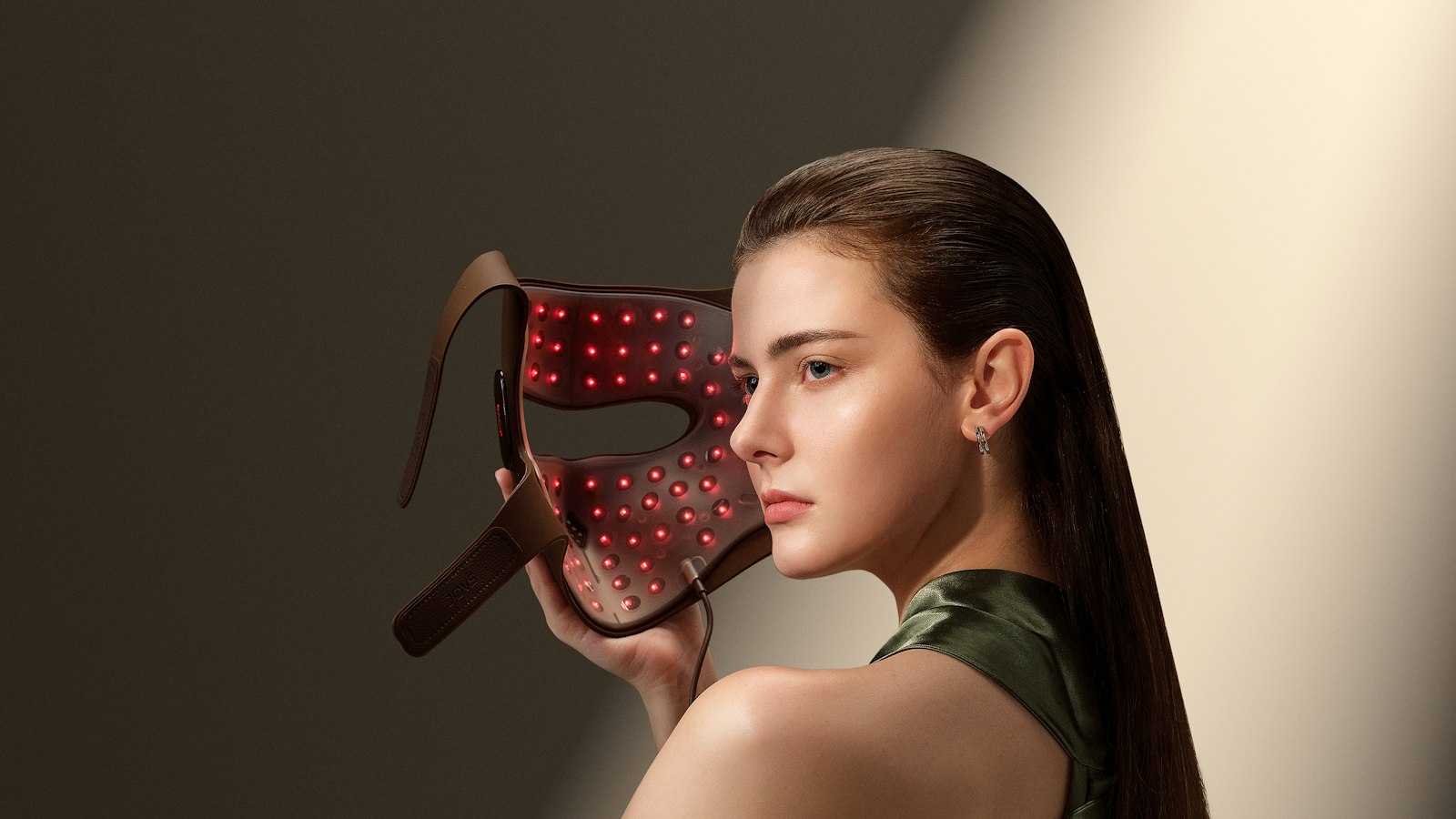
At-home devices: LED masks and other devices are popular, but results are modest and depend on consistent use. See our guides to at-home beauty devices and whether LED face masks work before you spend money.
“Menopause” skincare ranges: these can be good products, but the label itself doesn’t make them better. Check for the ingredients above: ceramides, hyaluronic acid, glycerin, a retinoid and sunscreen.
When to see a doctor or dermatologist
Most menopause skin changes are normal, but see your doctor or a dermatologist if you have:
- a rash, persistent redness or itching that doesn’t improve with moisturizer
- a sore, spot or patch that doesn’t heal within a few weeks
- a new mole, or a mole that changes in size, shape or color
- acne that’s painful, scarring or not improving with gentle treatment
- sudden hair growth with other changes, such as a deeper voice, which needs checking
- thinning hair or hair loss. Our guides to hair thinning in women and menopause hair loss explain the causes and options.
Skin cancer risk rises with age and years of sun exposure, so if you’ve spent a lot of time in the sun, ask your doctor about regular skin checks.
Frequently asked questions
Why does my skin feel so dry during menopause?
Falling estrogen means your skin makes less oil and holds less water, and its protective barrier becomes weaker. A gentle cleanser, a richer moisturizer with ceramides and hyaluronic acid, and shorter, warm showers usually help.
How much collagen do you lose after menopause?
Collagen falls by about 2% a year after menopause, and around 30% is lost in the first 5 years, according to the British Skin Foundation.
Can menopause cause acne?
Yes. As estrogen falls, the relative effect of androgens increases, which can trigger breakouts, often around the chin and jaw. Gentle treatments such as salicylic acid, azelaic acid and retinoids can help, and a dermatologist can prescribe stronger options.
What is the best skincare routine for menopausal skin?
Keep it simple: a gentle cleanser, a rich fragrance-free moisturizer, broad-spectrum SPF 30 or higher every morning and a retinoid a few nights a week. Add a vitamin C serum if you like.
Does HRT improve skin?
Studies suggest estrogen-based hormone therapy can improve skin collagen, thickness and hydration. But it isn’t prescribed for skin alone, so discuss the benefits and risks with your doctor if you’re considering it for other menopause symptoms.
Why is my skin itchy during menopause?
Itchy skin is usually caused by dryness and a weaker skin barrier. Moisturizing straight after bathing and avoiding fragrance often helps. See a doctor if itching is severe, comes with a rash, or doesn’t improve, as it can have other causes.
The bottom line
Menopause skin changes are real and largely driven by falling estrogen, which reduces collagen, moisture and the skin’s ability to repair itself. You can’t stop the change, but you can make a big difference with a few simple steps: cleanse gently, moisturize richly, wear SPF 30 or higher every day and add a retinoid at night. Be patient with new products, and see a dermatologist for anything that doesn’t settle or that worries you.
Sources
- British Skin Foundation. The impact of the menopause on your skin. Dr. Anjali Mahto, 2022.
- DeGiovanni C. Managing menopausal skin: a clinician’s review. EMJ Dermatology, 2025.
- Cleveland Clinic. Here’s how menopause affects your skin and hair.
- The Menopause Society. Misinformation surrounding hormone therapy.
- New York Medical College. Menopause reshapes skin health, from hair loss to acne. 2025.
Information checked as of November 2026. Read how we research and update articles in our editorial policy.
This article is for general information and isn’t a substitute for personal medical advice. Talk to your doctor or a dermatologist about any skin concerns and before starting a new treatment. See our full medical disclaimer.

I'm Noah Orono, founder and editor of Health Eden. I write about skincare and healthy aging, strength and weight management, and women's health from your 30s into midlife and beyond. Every guide starts with published research and guidance from dermatologists, doctors and certified trainers, then turns it into clear, practical steps. I'm not a medical professional, so I'll always tell you when something is worth raising with your doctor.
More about Health Eden →