Self-Care for Busy Women: 12 Small Habits That Make a Real Difference
 Noah Orono
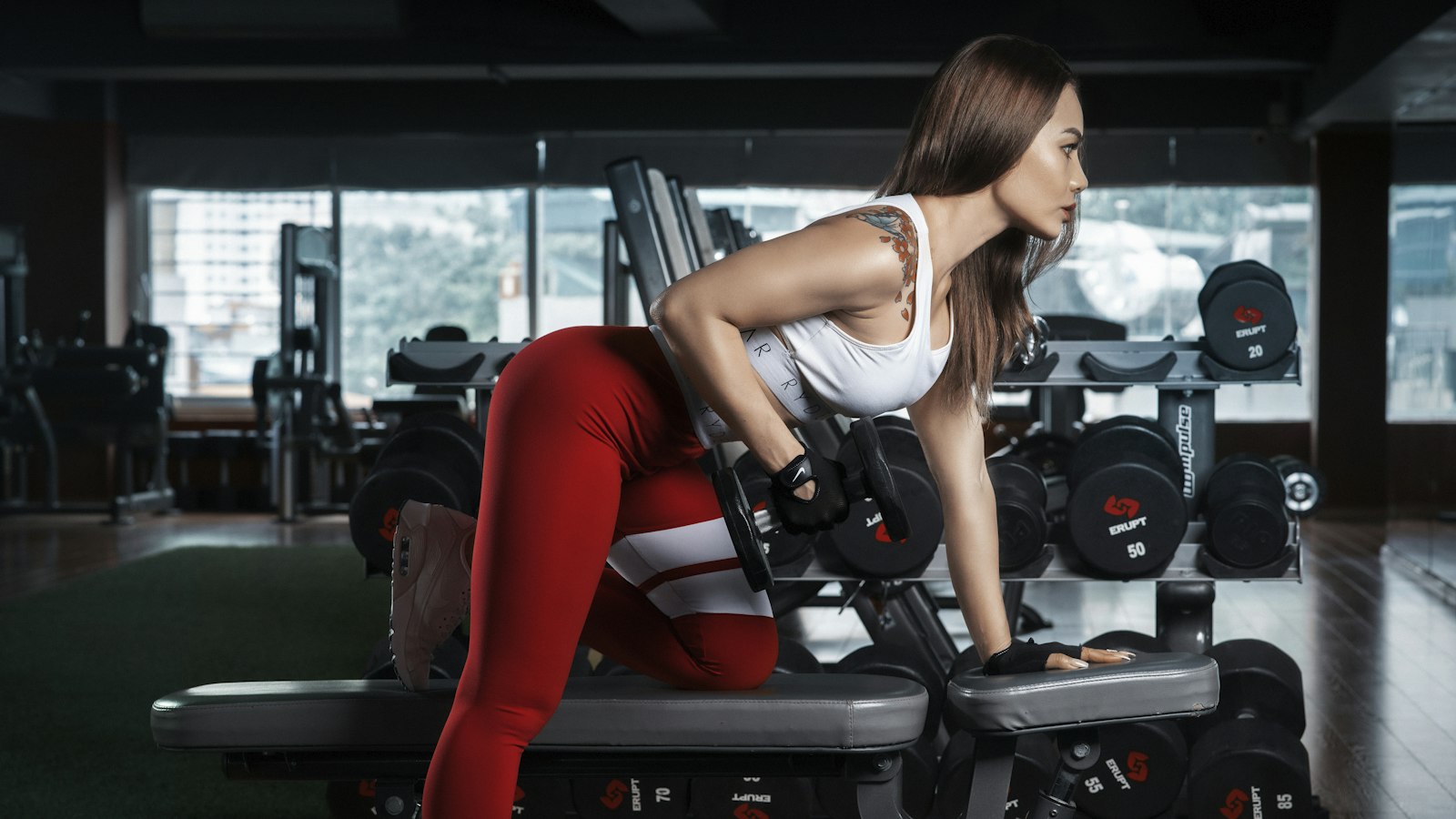
You can’t completely prevent muscle loss on GLP-1 medications such as Ozempic, Wegovy or Mounjaro, because some muscle is lost with almost any significant weight loss. But you can limit it. The two habits with the best support are regular strength training and eating enough protein at every meal, even when your appetite is low. Your doctor and a dietitian can set personal targets.
Key takeaways
- In major trials, roughly a quarter to two-fifths of the weight lost on GLP-1-type medicines was lean mass, which includes muscle.
- Most weight loss includes some muscle loss. With these drugs, the speed and size of the loss make protecting muscle more important.
- Four US medical and nutrition organizations said in 2025 that adequate protein and strength training are priorities for anyone on GLP-1 therapy.
- Expert groups advise adults over 65 to eat 1.0 to 1.2 g of protein per kg of body weight a day, spread across meals.
- Aim to work all major muscle groups at least twice a week, using weights, bands, machines or your own body weight.
- This article doesn’t cover dosing. Talk to your prescriber about the right pace of weight loss for you.
What are GLP-1 medications?
GLP-1 receptor agonists are prescription medicines that mimic a gut hormone involved in appetite and blood sugar control. They help you feel full sooner, slow stomach emptying and reduce cravings, which can lead to substantial weight loss. Common examples include semaglutide (sold as Ozempic and Wegovy) and tirzepatide (Mounjaro and Zepbound), which acts on GLP-1 and a second hormone, GIP.
They are prescribed for type 2 diabetes and, in some cases, for obesity or weight-related health problems. We don’t give doses for prescription medicines; your prescriber will decide what is right for you.
Do GLP-1 medications cause muscle loss?
Not directly. As obesity medicine specialist W. Scott Butsch, MD, who is employed by Ozempic and Wegovy maker Novo Nordisk, told Cleveland Clinic, “If you lose weight, you tend to lose some muscle, too.” That is true for other kinds of weight loss, too.
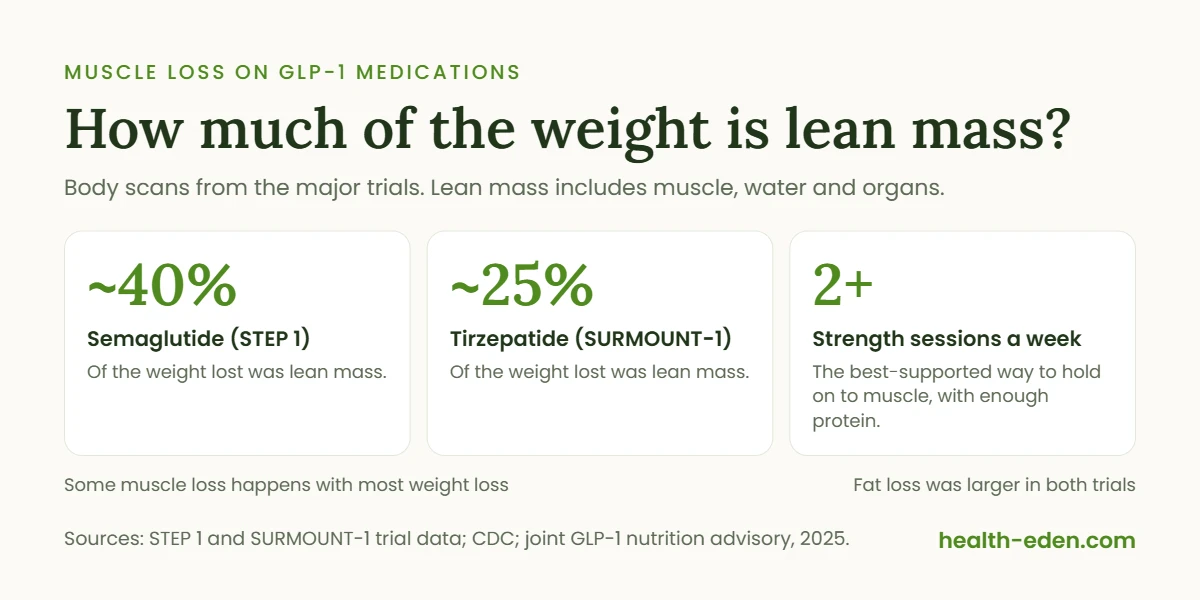
The concern is how much and how fast. Body scans in the major trials measured lean mass, which includes muscle along with water, organs and other non-fat tissue.
| Trial | Medicine | Share of weight lost that was lean mass |
|---|---|---|
| STEP 1 | Semaglutide | About 40% |
| SURMOUNT-1 | Tirzepatide | About one quarter |
Lean mass isn’t all muscle, and the proportion of lean tissue in the body actually rose in these trials because more fat was lost. But for women in midlife and beyond, who are already losing muscle with age and menopause, keeping as much muscle as possible matters for strength, balance, metabolism and bone health.
Why muscle matters as you lose weight
Muscle does far more than help you lift things. It helps you:
- climb stairs, carry shopping and get up from a chair easily
- stay steady on your feet and avoid falls
- support your bones, which are stimulated by muscle pulling on them
- manage blood sugar, because muscle uses glucose
- keep your resting energy use from dropping too far as you lose weight
Losing a lot of muscle can leave you weaker even when the scale looks better, and weight regain is common after stopping these medicines. Some researchers think losing a lot of muscle may play a part, though this hasn’t been proven.
What the experts recommend
In 2025, four organizations, the American College of Lifestyle Medicine, the American Society for Nutrition, the Obesity Medicine Association and The Obesity Society, published a joint advisory on nutrition for people on GLP-1 therapy. Its priorities include adequate protein, strength training to limit loss of lean mass, preventing nutrient deficiencies and managing digestive side effects. As John E. Courtney, PhD, chief executive officer of the American Society for Nutrition, put it, “it’s clear that medication alone is not a complete solution.”
The advisory doesn’t set exact numbers, so the targets below come from other expert guidance. Ask your doctor or a registered dietitian to tailor them to you.
Strategy 1: Strength train at least twice a week
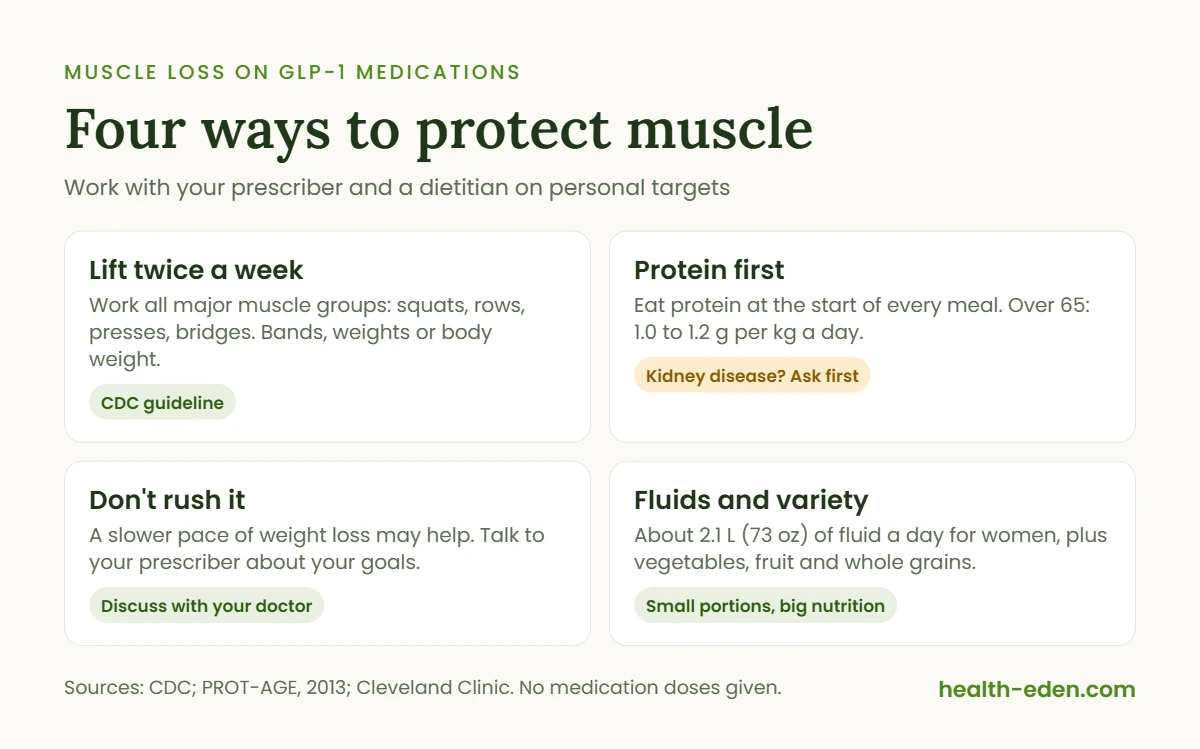
Resistance training is the most direct way to tell your body to keep muscle. The CDC’s physical activity guidelines recommend muscle-strengthening activities that work all major muscle groups at least two days a week.
Good options include:
- Bodyweight moves: squats to a chair, wall push-ups, glute bridges, step-ups
- Resistance bands: rows, presses and leg exercises at home
- Dumbbells or kettlebells: start light and build up gradually
- Gym machines: leg press, chest press, rows and lat pulldowns
Cleveland Clinic notes that improvements in muscle may show within two to three months of consistent training. If you’re new to it, our guide to strength training for women over 50 and our home strength training guide show you how to start safely.
Strategy 2: Prioritize protein at every meal
Protein supplies the building blocks your body needs to maintain muscle. On a GLP-1 medicine, your appetite may be much smaller, so it is easy to fall short without noticing.
Cleveland Clinic gives a general guideline of about 0.8 to 1 g of protein per kg of body weight a day, and notes that age, activity and intentional weight loss can change your needs. For adults over 65, the PROT-AGE Study Group recommends 1.0 to 1.2 g per kg a day.
This range is the over-65 recommendation; younger adults can use it as a guide with their dietitian.
| Body weight | 1.0 to 1.2 g per kg per day |
|---|---|
| 150 lb (68 kg) | 68 to 82 g |
| 180 lb (82 kg) | 82 to 98 g |
| 210 lb (95 kg) | 95 to 114 g |
| 240 lb (109 kg) | 109 to 131 g |
If you have a lot of weight to lose, your dietitian may calculate your target from a healthier goal weight rather than your current weight.
Tips for eating protein with a small appetite
- Eat protein first at each meal, before vegetables and starches.
- Choose protein-dense foods: Greek yogurt, cottage cheese, eggs, fish, chicken, tofu and lentils pack a lot of protein into small portions.
- Have smaller, more frequent meals if large meals make you feel sick.
- Use soft or liquid options on days with nausea, such as yogurt, milk or a protein shake.
- Plan ahead. Our guide to meal prep for weight loss has ideas for batch-cooking protein.
A worked example: one week for a 180 lb woman
Here is how both strategies can fit into a week for a 180 lb (82 kg) woman on a GLP-1 medicine, aiming for about 82 to 98 g of protein a day. It is an example, not a prescription.
| Day | Movement | Protein focus |
|---|---|---|
| Monday | 30-minute full-body strength session (squats, rows, presses, bridges) | Greek yogurt breakfast, chicken salad lunch, fish dinner |
| Tuesday | 30-minute walk | Eggs, lentil soup, tofu stir-fry |
| Wednesday | Rest or gentle stretching | Cottage cheese snack added to usual meals |
| Thursday | 30-minute full-body strength session | Protein-first meals; milk or a shake if appetite is low |
| Friday | 30-minute walk | Tuna and bean salad |
| Saturday | Longer walk or bike ride | Eggs and smoked salmon brunch |
| Sunday | Rest | Prep protein for the week ahead |
That gives two strength sessions plus about 90 minutes or more of walking or cycling. You can build toward the CDC’s recommendation of 150 minutes of moderate activity a week as your energy allows. Our guide to walking for weight loss has simple routines.
Other habits that help
- Don’t lose weight too fast. Dr. Butsch advises a slower pace of weight loss and talking to your doctor about your goals. Your prescriber can adjust your plan if you are losing weight very quickly.
- Stay hydrated. Cleveland Clinic cites the Academy of Nutrition and Dietetics figure of about 2.1 liters (73 oz) of fluid a day for women, though needs vary.
- Eat a varied diet. Smaller portions make every meal count, so include vegetables, fruit, whole grains and healthy fats for vitamins, minerals and fiber.
- Look after your bones. Get enough calcium and vitamin D, and ask your doctor whether a bone density scan makes sense for you, especially after menopause.
- Sleep well. Good sleep supports recovery from exercise and appetite regulation.
What about protein powders and supplements?
Protein shakes can help on days when you can’t face solid food. But they shouldn’t replace meals, and a 2025 Consumer Reports test found that more than two-thirds of the 23 protein powders and shakes it tested contained more lead per serving than its daily level of concern. Use them occasionally, choose products from brands that publish independent contaminant testing and favor dairy-based options when you can.
Other supplements marketed for “muscle preservation” on GLP-1s generally lack good evidence. Our honest look at whether weight loss supplements work explains why caution is wise.
Honest pros and cons
| Approach | Pros | Cons |
|---|---|---|
| Strength training | Strongest tool for keeping muscle; helps bones and balance | Takes time to learn; may be tiring at first with less food |
| Higher protein | Supports muscle; can help fullness | Harder with a small appetite; caution with kidney disease |
| Slower weight loss | May reduce muscle loss | Results come more gradually |
| Protein shakes | Easy on low-appetite days | May contain contaminants; don’t replace meals |
Who should be careful
- Kidney disease: don’t increase protein without advice from your doctor or a renal dietitian.
- Osteoporosis, joint problems or heart disease: ask your doctor or a physical therapist which exercises are safe for you.
- Severe nausea, vomiting or diarrhea: these can make it hard to eat and drink enough. Tell your prescriber.
- History of disordered eating: appetite-suppressing medicines and calorie restriction need careful support from your care team.
- Pregnancy: GLP-1 medicines for weight loss aren’t recommended during pregnancy; talk to your doctor if you are planning a pregnancy.
When to see a doctor
Contact your doctor if:
- you feel much weaker, find stairs or getting up from a chair harder, or have had a fall
- you are losing weight very quickly or can’t eat enough to meet basic needs
- you have ongoing nausea, vomiting, diarrhea or signs of dehydration, such as dizziness or very dark urine
- you have severe stomach pain, which needs urgent medical attention
- you want help setting a protein target or a safe exercise plan
Frequently asked questions
How much muscle do you lose on Ozempic?
In the STEP 1 trial of semaglutide, about 40% of the weight lost was lean mass, which includes muscle. In the SURMOUNT-1 trial of tirzepatide, it was about a quarter.
Can you prevent muscle loss on GLP-1 medications?
You can’t prevent it entirely, because some muscle is lost with most weight loss. Strength training at least twice a week and eating enough protein are the best ways to limit it.
How much protein should I eat on Wegovy or Ozempic?
There is no single official number. Cleveland Clinic gives a general guideline of 0.8 to 1 g per kg a day, and adults over 65 are advised 1.0 to 1.2 g per kg by the PROT-AGE expert group. A dietitian can set a personal target.
What exercise is best to keep muscle on a GLP-1?
Strength training that works all major muscle groups at least two days a week, such as squats, rows, presses and bridges with weights, bands or body weight.
Are protein shakes a good idea on GLP-1 medicines?
They can help on low-appetite days, but use them occasionally rather than daily. A 2025 Consumer Reports test found lead in many protein powders and shakes.
Does muscle loss on GLP-1s matter for women over 50?
Yes. Women already lose muscle with age and menopause, so protecting muscle during weight loss helps maintain strength, balance and bone health.
The bottom line
GLP-1 medications can lead to significant weight loss, and some of that loss will be muscle. You can limit it by strength training at least twice a week, eating protein at every meal and losing weight at a pace your doctor is comfortable with. Work with your prescriber and, if possible, a registered dietitian to set targets that suit your health. For more on building healthy habits that last, see our guides to sustainable weight loss nutrition and how to age well.
Sources
- The Obesity Society. Nutritional priorities to support GLP-1 therapy for obesity: joint advisory. 2025.
- Cleveland Clinic. Ozempic and muscle loss.
- Drug Discovery and Development. GLP-1 impact on lean mass.
- Wilding JPH, et al. Once-weekly semaglutide in adults with overweight or obesity (STEP 1). New England Journal of Medicine. 2021.
- Jastreboff AM, et al. Tirzepatide once weekly for the treatment of obesity (SURMOUNT-1). New England Journal of Medicine. 2022.
- Bauer J, et al. Evidence-based recommendations for optimal dietary protein intake in older people (PROT-AGE). J Am Med Dir Assoc. 2013.
- CDC. Adult activity: an overview.
- OPB (NPR). A study found lead in popular protein powders. Here’s why you shouldn’t panic. 2025.
Information checked as of November 2026. Read how we research and update articles in our editorial policy.
This article is for general information and isn’t a substitute for personal medical advice. Talk to your doctor before starting a new supplement, medication or exercise plan, and never change your medicine without speaking to your prescriber. See our full medical disclaimer.

I'm Noah Orono, founder and editor of Health Eden. I write about skincare and healthy aging, strength and weight management, and women's health from your 30s into midlife and beyond. Every guide starts with published research and guidance from dermatologists, doctors and certified trainers, then turns it into clear, practical steps. I'm not a medical professional, so I'll always tell you when something is worth raising with your doctor.
More about Health Eden →